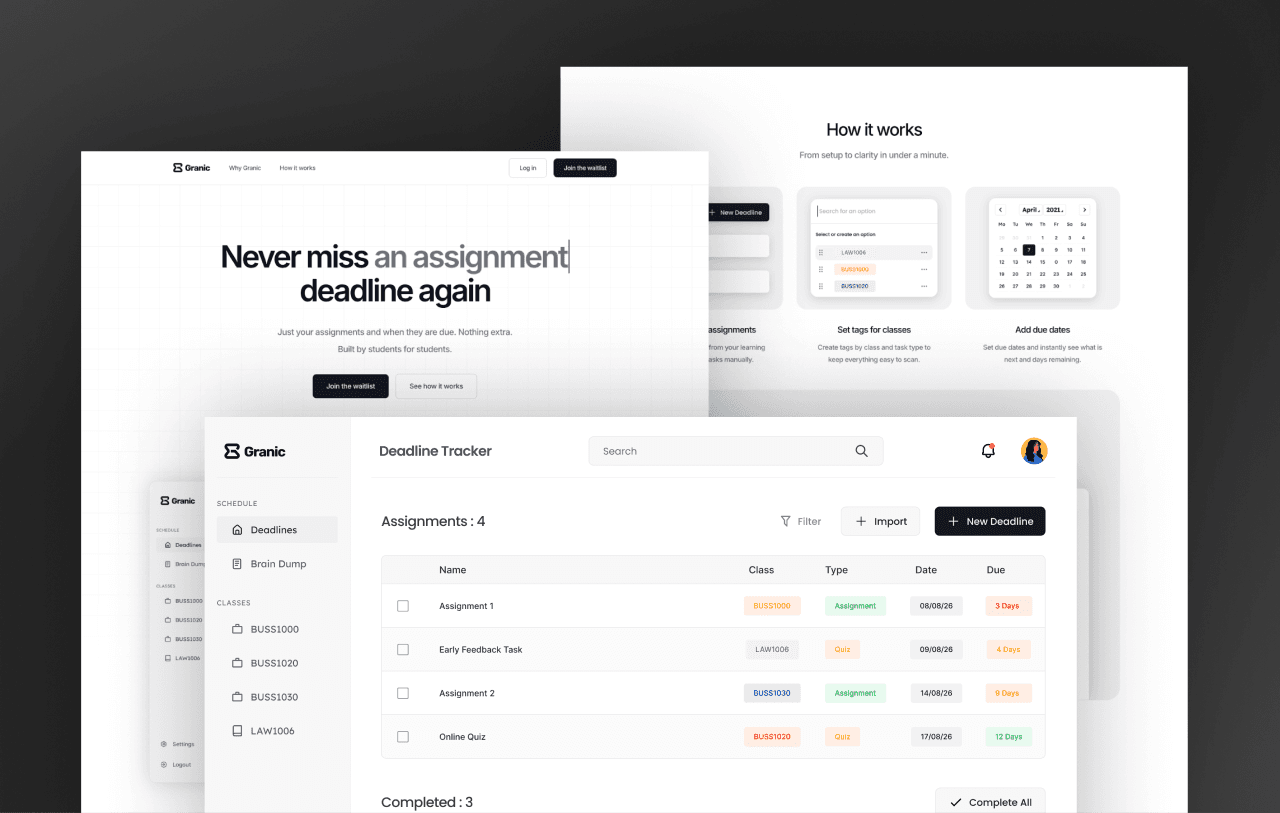
Deadline Tracker Waitlist
Granic - DEC 2025
Role
Design + Frontend
Team
Joshua Hatchard (Co-Founder)
Nathan Townsend (Co-Founder)
Timeline
Early Validation Phase
Overview
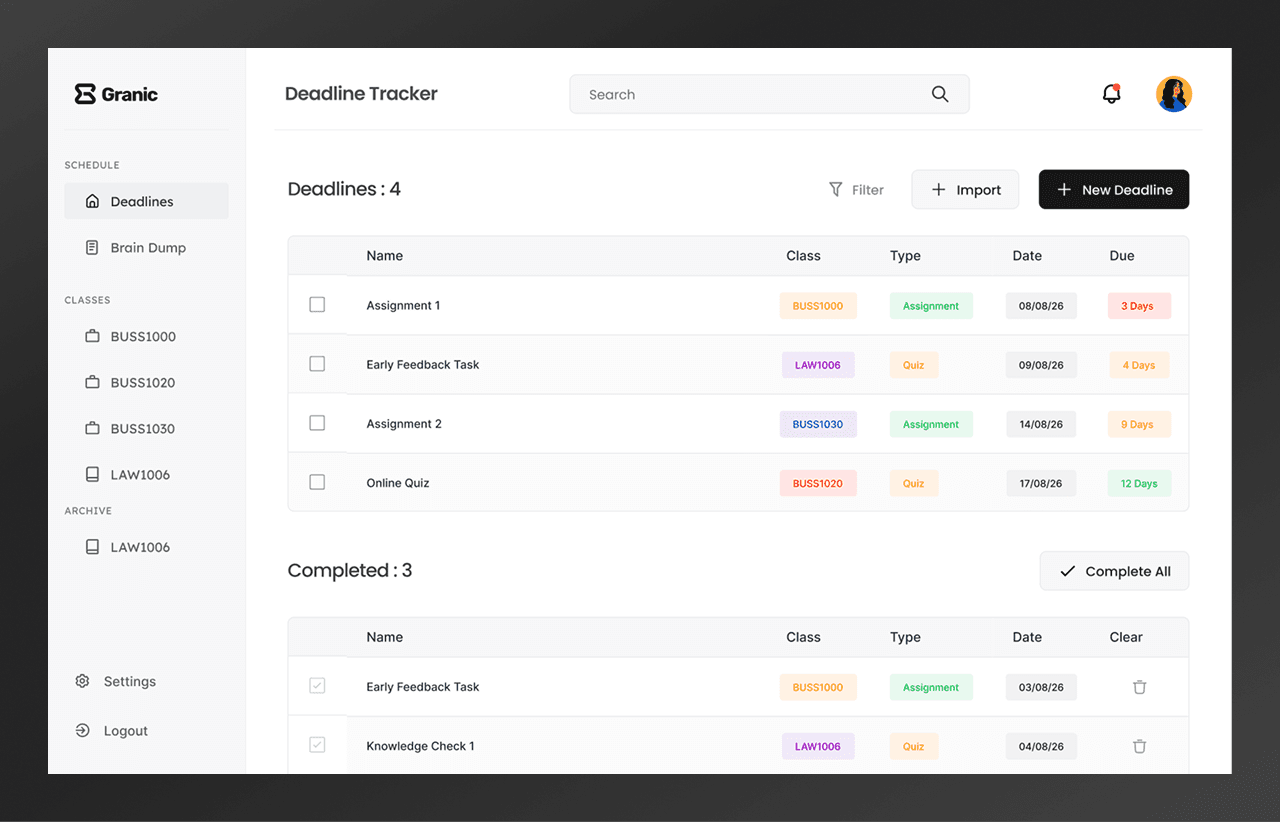
Granic is a student-focused productivity platform that consolidates assignment deadlines from LMS platforms into one streamlined workspace.
Before building the full product, we launched a landing page to validate whether students resonated with the problem and were willing to join a waitlist.
Problem
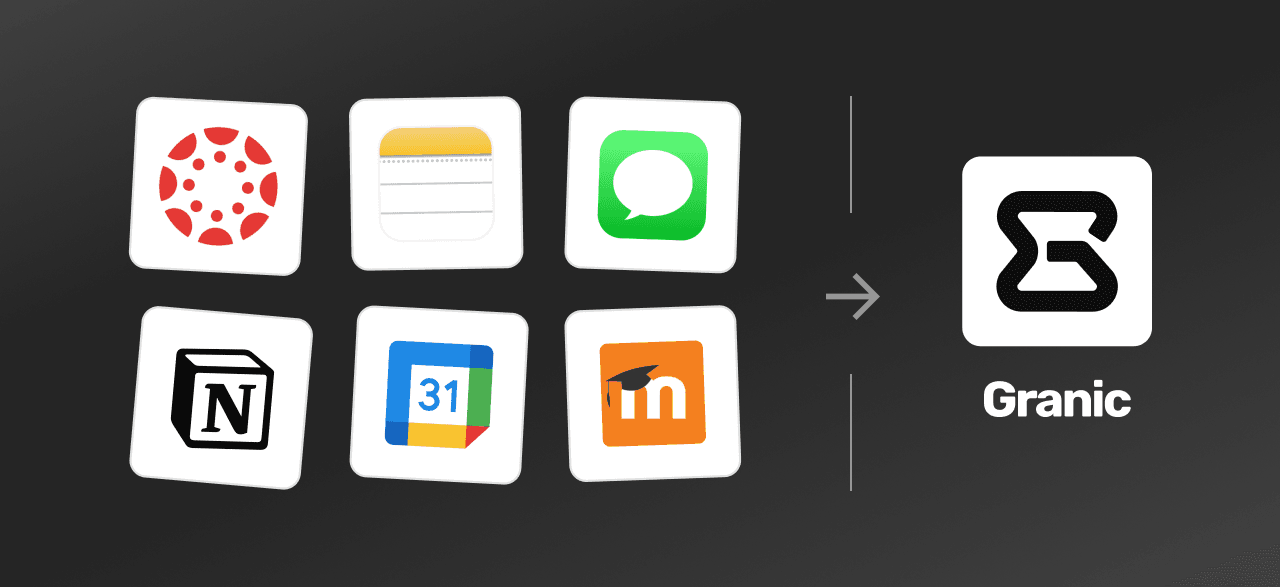
Students lack a single source of truth for deadlines
Students are constantly switching between Canvas, their email inbox and personal calendars just to piece together what's due and when. The mental overhead of managing all of this is a real cost and it's one students shouldn't have to carry.
Validation
Testing if the idea had demand
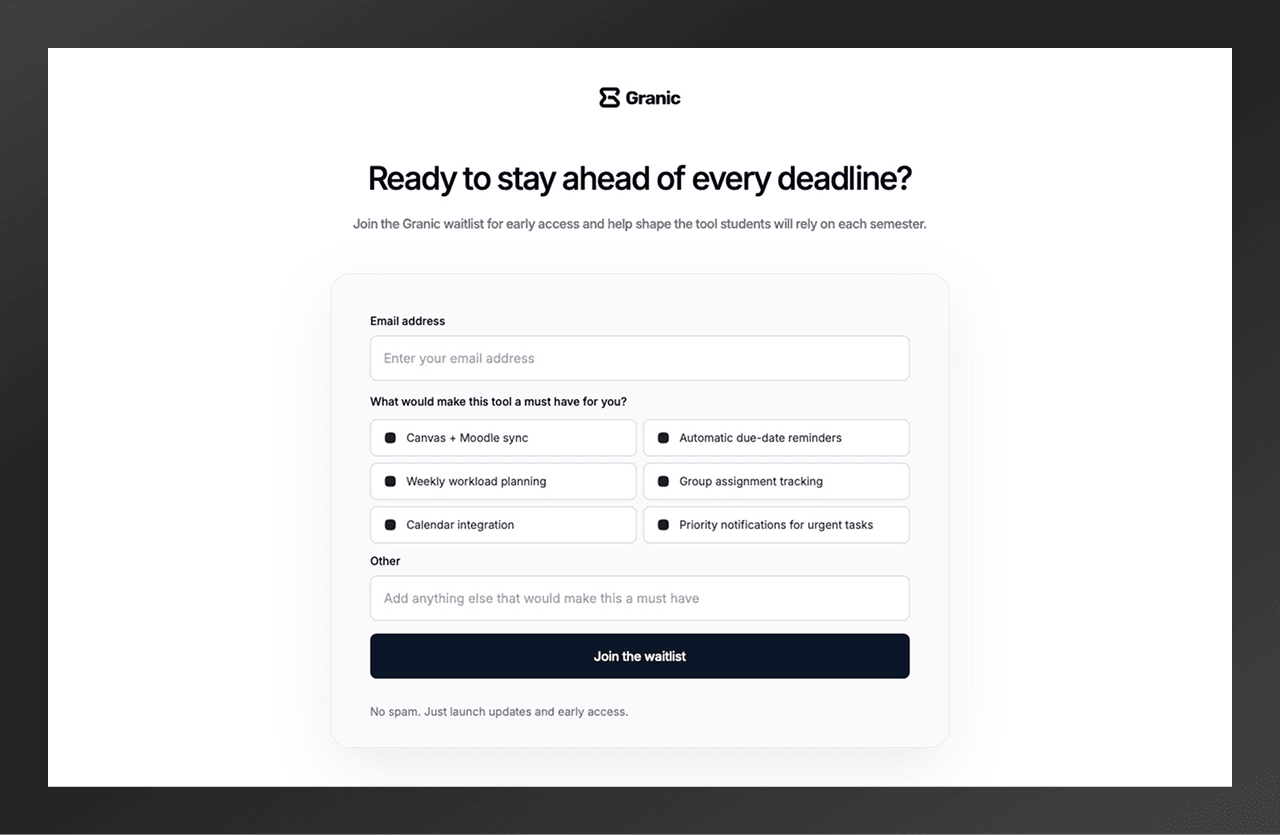
Before writing a single line of product code we wanted to know whether students felt this problem enough to act on it. Would they trust an early-stage product enough to hand over their email?
Approach
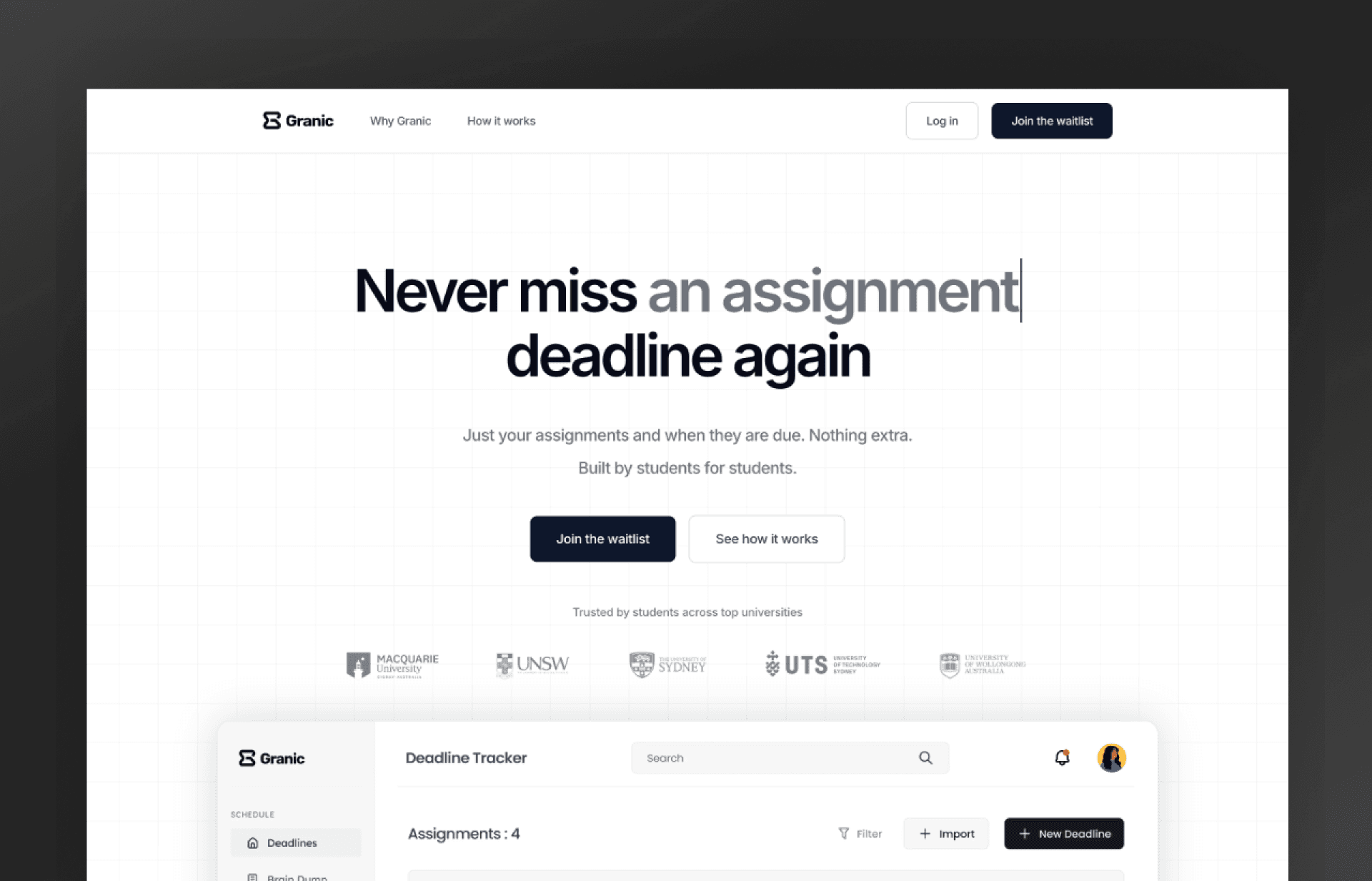
Product first, conversion focused
The landing page had one job, get a student who lands on it to sign up before they leave. That meant leading with the problem statement front and centre and removing anything that introduced friction or distraction. The structure moved from problem to solution to signup with no detours.
Design Decisions
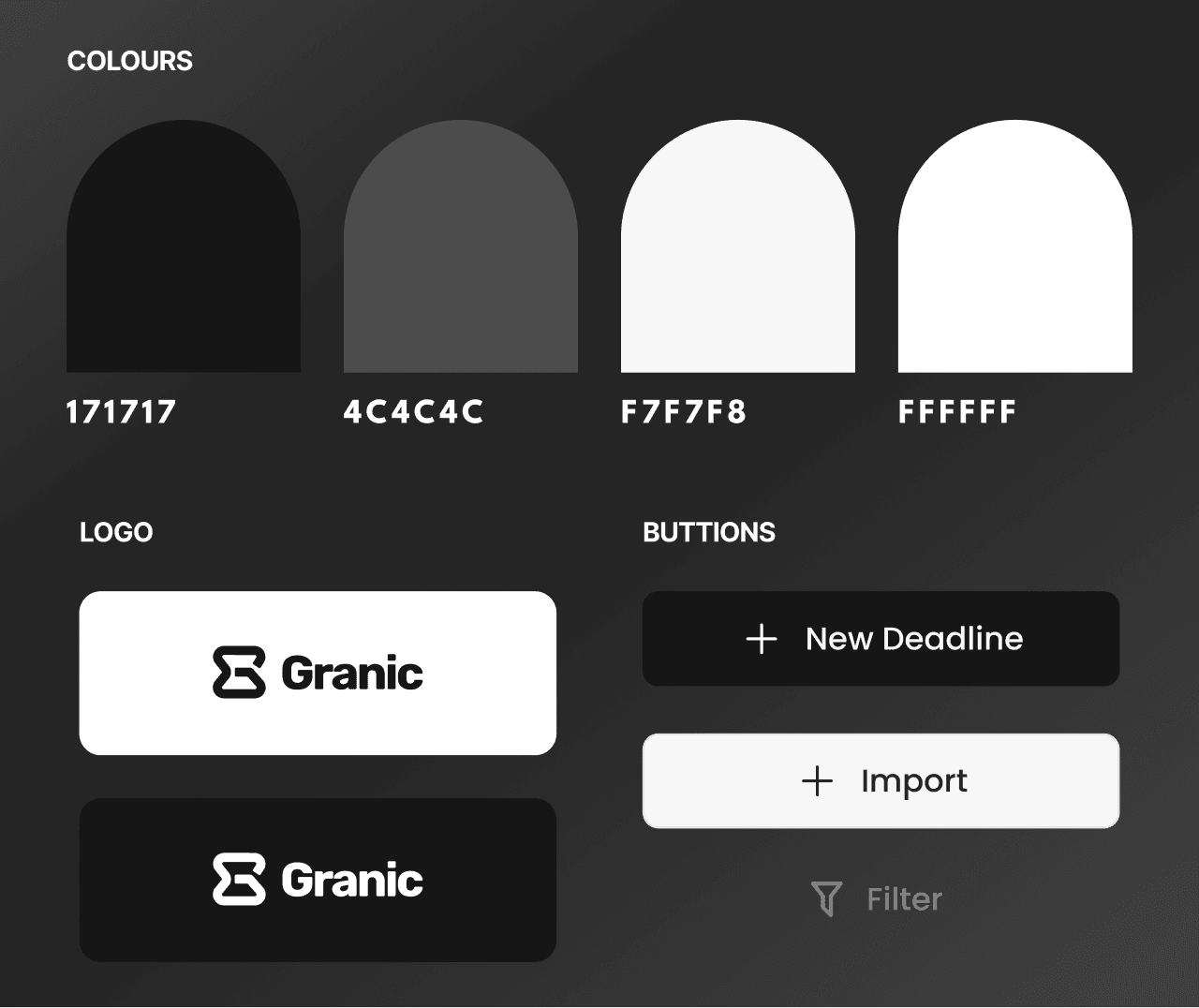
Minimal and distraction free
A strict black-and-white system was a deliberate choice. Colour draws attention and at this stage we didn't want attention on the interface, we wanted it on the idea. The typography does the heavy lifting with clear hierarchy guiding the eye from headline to supporting copy to CTA.
Execution
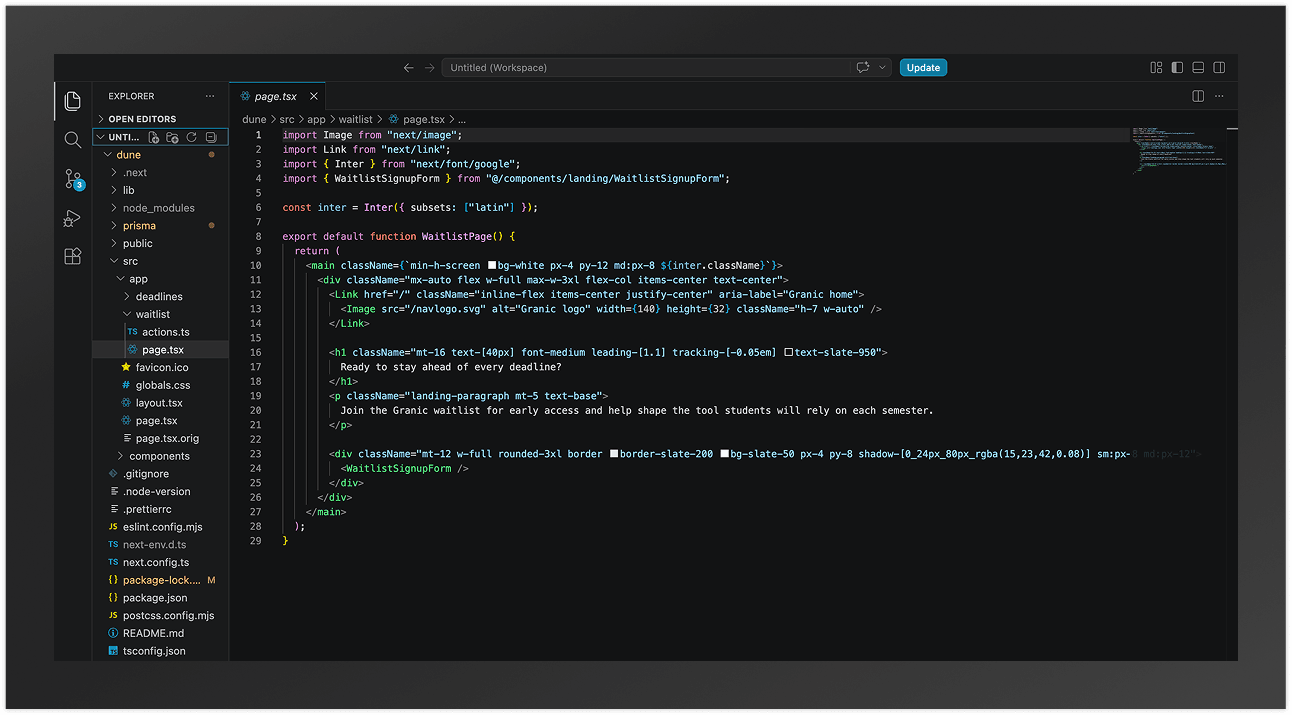
Designed and built end to end
I designed and developed the landing page end to end using Next.js and Tailwind for the frontend, with Prisma and Postgres handling the waitlist database. The stack was chosen to move fast without cutting corners, scalable and straightforward to maintain.
Outcome
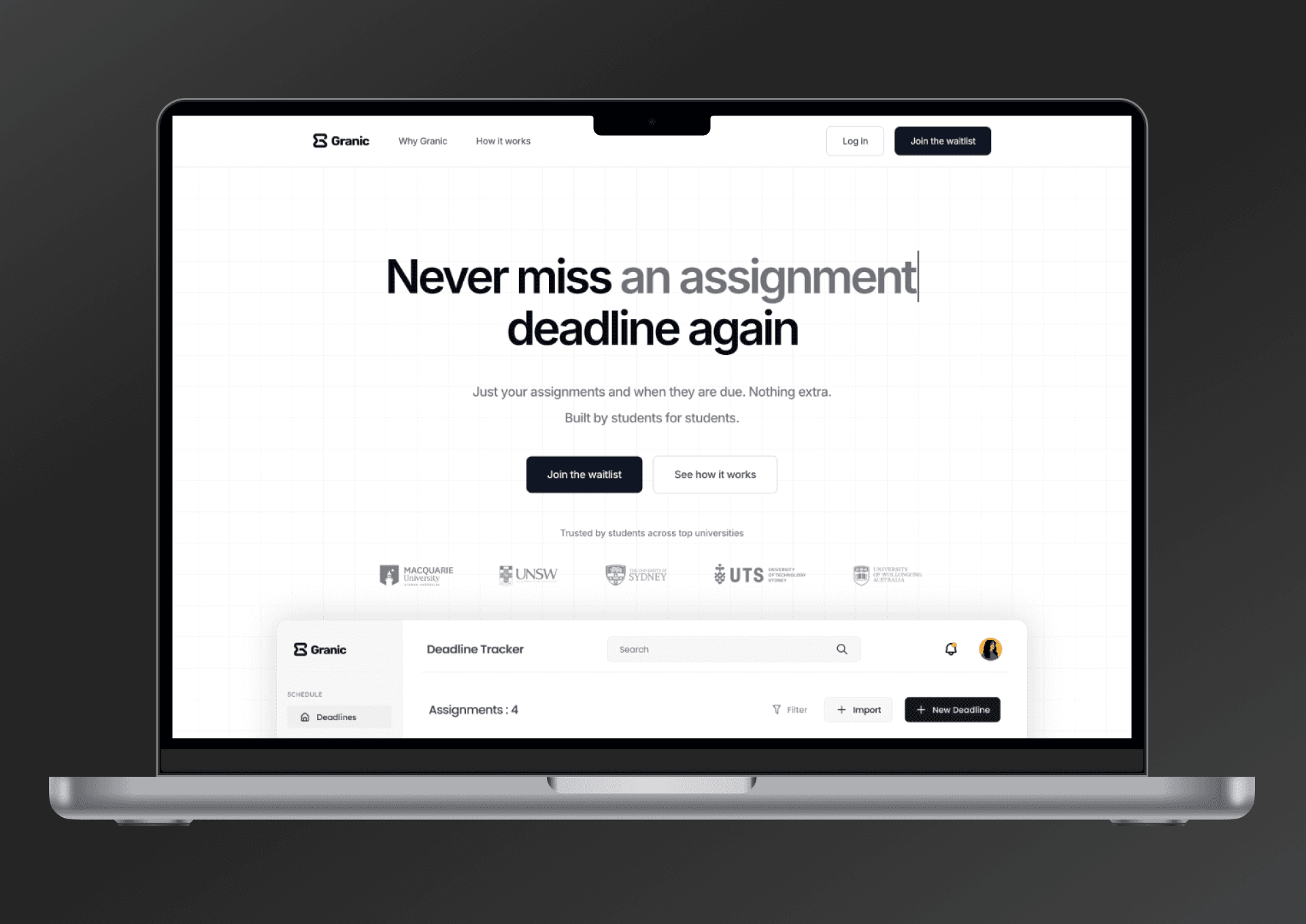
Early validation in progress
We're currently in the early stages of collecting signups. Each submission is the data point of a student who landed on the page, understood the problem and decided Granic was worth following. The results so far are informing how we refine and structure the MVP.
Reflection
What I learnt
Building the landing page before the product forced us to articulate the idea clearly and concisely, which turned out to be harder than expected. The process sharpened our positioning and gave us an early read on whether the framing resonated. It also reinforced the value of shipping something real as early as possible as a live page tells you more than any internal discussion ever could.
NEXT CASE STUDY
USYD - DESIGNING FOR COUNTRY
UI DESIGN | DEVELOPMENT